

Discover why UK landlords are switching from traditional tenancies to Company Lets in 2025 — secure guaranteed rent, no voids, and total peace of mind.
Introduction
As the UK rental market continues to evolve in 2025, landlords are increasingly re-evaluating the way they manage their properties. The traditional Assured Shorthold Tenancy (AST) model — long regarded as the industry norm. This is now steadily being replaced by Company Let agreements, often referred to as Guaranteed Rent schemes. This shift is driven by changing economic conditions, tighter regulations, and a growing appetite for predictability and passive income.
This blog examines the key differences between the Company Let and Traditional Tenancy models, analysing why an increasing number of landlords are opting for the stability and convenience offered by guaranteed rent.

Understanding the Two Models
Traditional Tenancy
This is the most common way of renting a property — you rent directly to a tenant (an individual or family). The tenant pays you rent each month and agrees to follow the tenancy rules.
However, you’re still responsible for:
- Finding and vetting tenants
- Handling maintenance or repairs
- Chasing late rent
- Covering costs when the property is empty
It can be profitable in good times, but it also means more work, more risk, and less consistency — especially if tenants fall behind on payments or move out suddenly.

Company Let (Guaranteed Rent Model)
With a Company Let, you rent your property to a professional management company instead of a tenant.
The company pays you a fixed monthly rent, every month, even if the property is empty. They then use the property for serviced accommodation or professional tenants — and take care of everything for you.
That includes:
- Tenant or guest management
- Cleaning, maintenance, and safety checks
- Bills and day-to-day running
- Full compliance with legal standards
In short, you still own the property — but the management company handles all the work and risk. You get paid the same amount each month, guaranteed.

Comparative Analysis: Key Advantages of the Company Let Model
In essence, the Company Let model converts what has traditionally been an active, time-intensive investment into a passive and predictable income source.
| Factor | Traditional Tenancy | Company Let / Guaranteed Rent |
| Income Stability | Dependent on tenant reliability and occupancy levels | Fixed rent paid monthly, regardless of voids |
| Management Involvement | Landlord must handle tenants, maintenance, and compliance. Standard management fees typically range between 10% and 15% of the monthly rent, with additional charges for tenant find services, renewals, and maintenance coordination. | Fully managed by professional operator. There are no agency fees, no tenant-find charges, and no commission deductions — just one guaranteed amount paid consistently every month. |
| Risk Exposure | High: arrears, voids, and potential damages | Low: operator assumes operational and tenant risk |
| Regulatory Burden | Landlord directly accountable for compliance | Company ensures property meets legal standards |
| Financial Forecasting | Variable cash flow | Predictable and consistent income stream |
Why 2025 Has Accelerated the shift?
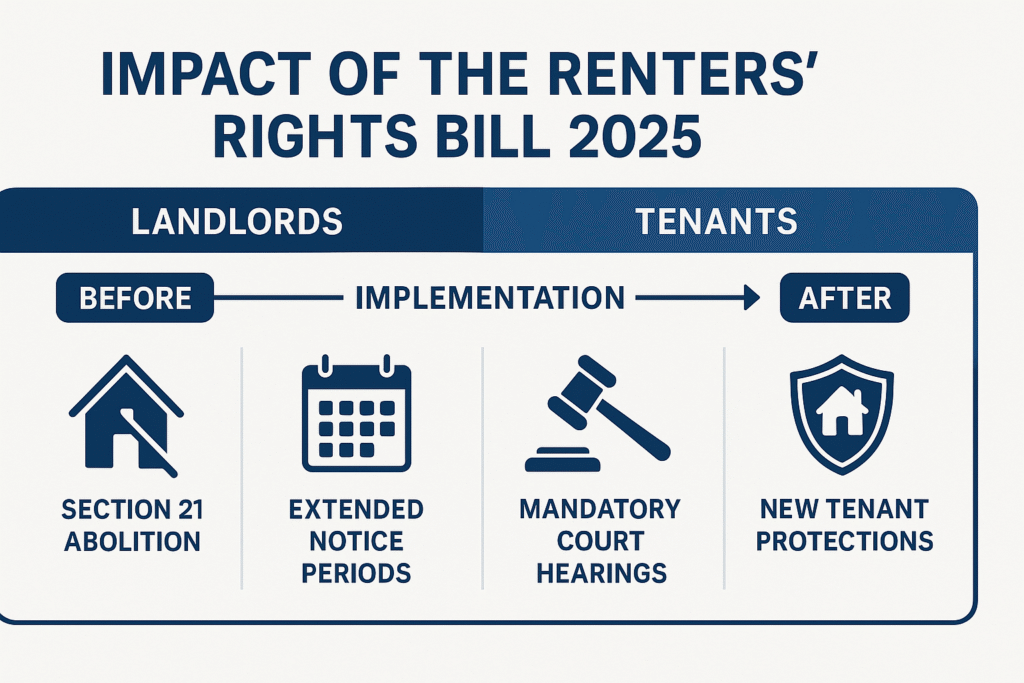
The economic climate of 2025 has further accelerated the move towards guaranteed rent. With mortgage interest rates remaining unpredictable, many landlords are prioritising financial stability over speculative profit. Fixed monthly payments through a Company Let arrangement provide a safeguard against fluctuating markets and help landlords manage rising mortgage costs more effectively.
Regulatory complexity has also played a major role in this shift. The introduction of new renter protection measures, energy efficiency requirements, and compliance obligations has made property management increasingly demanding. Many landlords now prefer to work with professional operators who have the expertise and systems to stay compliant, rather than managing these requirements alone.
Additionally, tenant behaviour has evolved. In the post-pandemic economy, the workforce has become far more mobile, with professionals, contractors, and short-term workers seeking flexible, high-quality accommodation rather than long-term leases. Company Let operators are well-positioned to cater to this modern tenant profile by offering serviced accommodation and flexible tenancy options.
As a result, landlords are no longer focused purely on achieving the highest possible yield. Instead, they’re seeking reliability, compliance assurance, and time freedom — all of which are central benefits of the guaranteed rent model.
Risk Mitigation and Professional Assurance
Perhaps the most compelling advantage of a Company Let is the degree of risk reduction it offers. When a landlord partners with a reputable companies, they effectively transfer the day-to-day and financial risks of property. The landlord no longer needs to worry about unpaid rent, extended void periods, property damage, or unexpected maintenance issues.
Professional companies, such as AKC Rental, carry out regular property inspections, maintain hotel-grade standards of cleanliness and presentation, and ensure full legal and safety compliance. This not only protects the landlord’s asset but also enhances its long-term value.
More importantly, the relationship between landlord and operator evolves from a traditional landlord-tenant dynamic into a business-to-business partnership. Both parties are invested in maintaining the property to a high standard and ensuring consistent returns. The landlord provides the property, and the company brings expertise, systems, and professionalism — creating a sustainable model built on trust and performance.

Strategic Considerations for Landlords
While some landlords may initially view Company Lets as producing slightly lower gross rent compared to a traditional tenancy, this perspective often changes once all variables are considered. When factoring in costs such as repairs, voids, tenant turnover, and management time, the net return under a Guaranteed Rent agreement can actually be higher.
For landlords with multiple properties, the benefits compound further. A guaranteed income across several units offers exceptional predictability and reduces the administrative workload of managing multiple tenancies. This allows investors to focus on scaling their portfolios, exploring new acquisitions, or leveraging properties for refinancing — all without the day-to-day stress of management.
The Company Let model also aligns with the modern property investor’s goal of achieving time freedom. It enables landlords to retain ownership and profit from their assets while freeing themselves from the operational side of property management. For many, this marks the evolution from being an “active landlord” to a true property investor.
Conclusion
In 2025, the decision between a Traditional Tenancy and a Company Let is no longer a simple choice about rental yield. It has become a decision about control, consistency, and peace of mind. As legislation tightens and the rental market becomes increasingly complex, landlords are seeking ways to reduce stress, maintain compliance, and protect their income streams.
The Guaranteed Rent model — through a Company Let agreement — delivers all three. It offers landlords a stable, reliable income with no voids, no tenant issues, and no unexpected costs, while ensuring that their property remains in professional hands. For many, this approach represents not just a new rental method, but the future of property management in the UK.